H">

We didn't open a restaurant. We opened a pot.

I grew up watching my grandmother cook in her house off Mir Alam Tank Road in Old City. She'd start the marination at 4 in the morning. The meat sat in curd and spices for six hours before she even thought about lighting the coal. When people ask me where the recipe comes from, I don't know what else to say except: her kitchen, her method, her patience.

"The first month, we sold twelve biryanis on a good day. Sometimes six. My wife kept the books."

We opened in 2015. The space was above a tailor's shop in Banjara Hills — eight tables, no reservations, a hand-painted board my cousin made. The first few weeks were quiet. I remember sitting with our cook watching cars go by, wondering if we'd made a terrible mistake. The rent was ₹28,000 a month. The biryanis were priced at ₹280. You can do that arithmetic yourself.

What I didn't expect was how fast people started bringing their families. A customer would come alone on a Tuesday, then on Friday he'd walk in with six people and say "this is the place I told you about." That happened so often the first year I stopped counting. There's something about biryani — people want to share it. It doesn't feel right eating it alone, which tells you something about the dish itself.

We expanded into the second room in 2018 and added the prep kitchen two years after that. The marination schedule hasn't changed. We still start at midnight. My grandmother passed in 2019 and I cook it exactly the way she showed me, which means I haven't made a single improvement in eleven years. I'm not sure that's something to be proud of. But the biryani is good, so.
2015
Founded
8
Tables at Opening
1
Unchanged Recipe
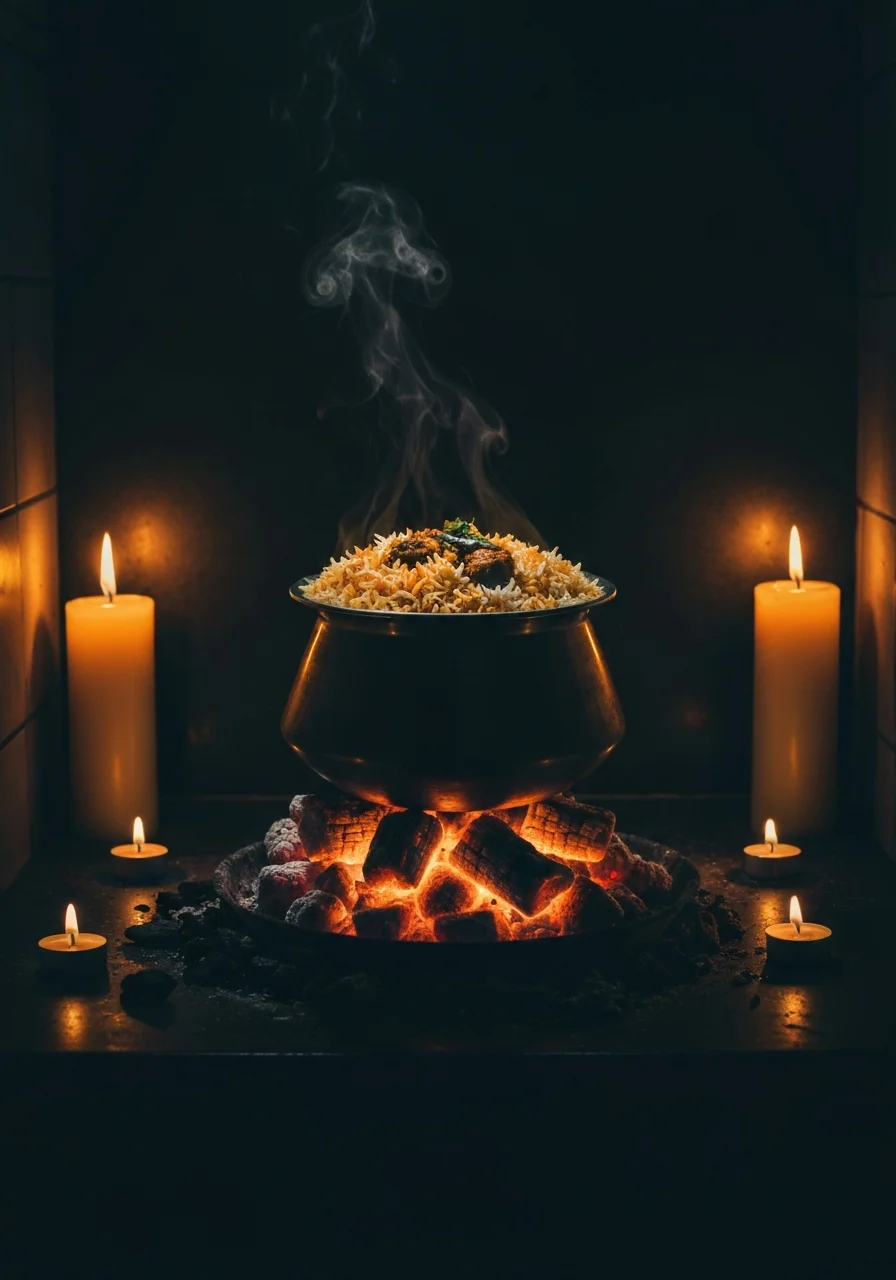
A sealed biryani dum pot resting on burning charcoal in the Hashtag kitchen

Our prep kitchen, 4 AM — every morning since 2015
Four things we refuse to negotiate on.

Not policies. Not best practices. Just the four reasons the biryani tastes the way it does.

No Microwave. Ever.

Reheating in a microwave dries the rice unevenly and breaks the texture. If something's cold, we heat it on dum again. Takes longer. Doesn't ruin the rice. We've had staff ask to use one. They don't ask twice.

Charcoal Only

We use 30 kg of charcoal every morning. A gas flame spikes and drops too quickly. Charcoal heat is slow and steady — it wraps around the vessel instead of concentrating at one point. The difference shows up in the crust at the bottom of the pot. That crust is half the reason people come back.

Sealed with Wheat Dough

The dough seal traps steam. The flavour that would otherwise escape is forced back into the rice and meat for the full 90 minutes. When we break the seal at your table, you're smelling the entire cook at once — that rush of steam isn't theatre. It's the whole point of dum.

Never Refrigerate Cooked Rice

Refrigeration turns basmati grainy. We cook what we sell. When the pot runs out at 9 PM, that item is done for the night. If you come at 9:15 and the biryani's gone, we're sorry. Come earlier next time.

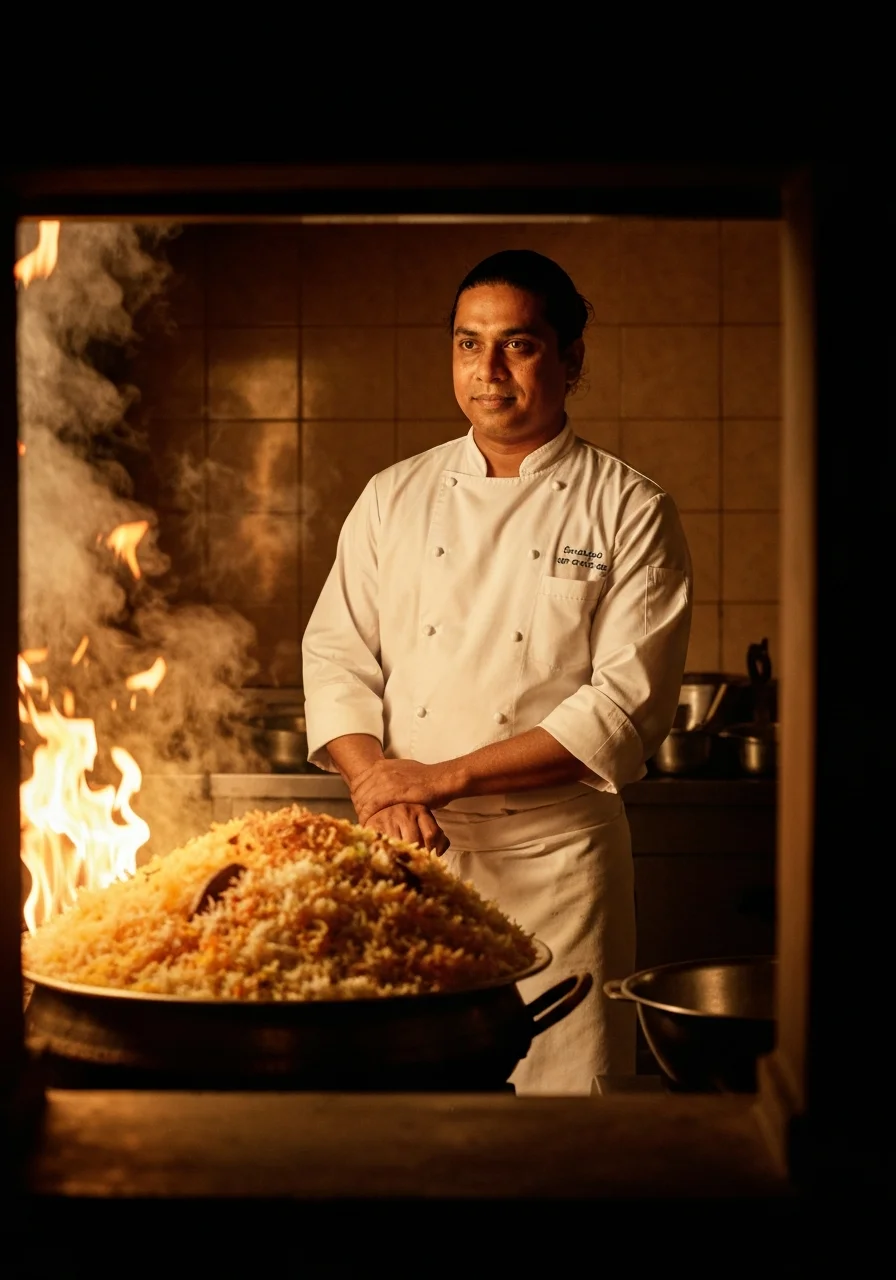
Ustad Riyaz Ahmed, Head Cook at Hashtag since 2015
The dum seal breaks in front of the customer. That steam — the smell that comes out — that's not cooking. That's proof.

Ustad Riyaz Ahmed

Head Cook, Hashtag — since 2015

Riyaz learned biryani in the same Old City tradition we did — watching, not reading. He spent fourteen years cooking for wedding catering before we convinced him to slow down and do one thing properly. He runs the kitchen with three assistants and refuses to cook more than four pots per service. "More than that and you stop watching," he says. We haven't pushed it.

He doesn't measure the spices. We've tried to document the recipe exactly and the closest we've got is "until it smells right." For what it's worth, it smells right every single time.

Four steps. No shortcuts. Exactly how my grandmother did it.

01

Marinate Raw

Mutton is cut, trimmed, and marinated with curd, raw papaya paste, whole spices, and the house blend. Six hours minimum — we start at midnight for the lunch service. The papaya breaks down the fibres so the meat cooks gently from inside during dum, not just on the surface.

6 Hours
02

Layer Raw Meat

Raw marinated meat goes into the vessel first. Then 70% cooked basmati. Then fried onions, saffron water, rose water, and ghee poured over the top. No pre-cooking the meat. That's the kachi distinction. Pre-cooking is pakki biryani. Different dish entirely.

Layering
03

Seal with Dough

Wheat dough rolled into ropes and pressed around the rim — airtight. The seal creates its own steam chamber inside the vessel. Nothing escapes. If the seal breaks early, the cook starts over. This happens maybe once a year. Riyaz takes it personally.

Airtight Seal
04

Dum 90 Minutes

Low charcoal heat underneath. Hot coals placed on the flat lid. Rice and raw meat cook together in the trapped steam for ninety minutes. At the end, the dough crust is golden and hard. We wait five more minutes before breaking the seal at the table. Those five minutes matter.

90 Minutes
Kachi Gosht Biryani Charcoal Dum Only Sealed with Wheat Dough Old City Recipe Banjara Hills Since 2015 No Shortcuts

Kachi gosht, kebabs, Hyderabadi sweets. See what's on tonight.

The full menu with prices. Kachi Gosht Biryani from ₹520, kebabs from ₹380, and proper Hyderabadi desserts. Takeaway available after 6 PM.